
The airway narrows or closes
Air has trouble moving through your upper airway while you sleep.
Untreated sleep apnea’s impact
Every pause in breathing can mean a dip in blood oxygen. Night after night, those dips and the broken sleep that comes with them can strain the body. In Stranded with Sleep Apnea resources, we call this "oxygen debt." It isn’t a diagnosis. It’s an expression to describe how sleep apnea can impact your body over time when left untreated.
The oxygen connection
Air has trouble moving through your upper airway while you sleep.

Your blood oxygen level can fall. Brief awakenings help restore breathing but interrupt sleep.

Repeated oxygen drops strain your body with health impacts that can build over time. While not a formal medical diagnosis, "oxygen debt" can be a helpful way to describe this harmful cycle.
"Oxygen debt" and sleep apnea
Every time your breathing stops, your blood oxygen can fall, and it may not come all the way back before the next pause. Multiply that by dozens or hundreds of pauses a night, night after night, and the shortfall can take its toll. We call it "oxygen debt." It doesn’t stay in the bedroom. Over time, it can follow you into your mood and focus during the day, and into the health of your heart, brain, and metabolism.
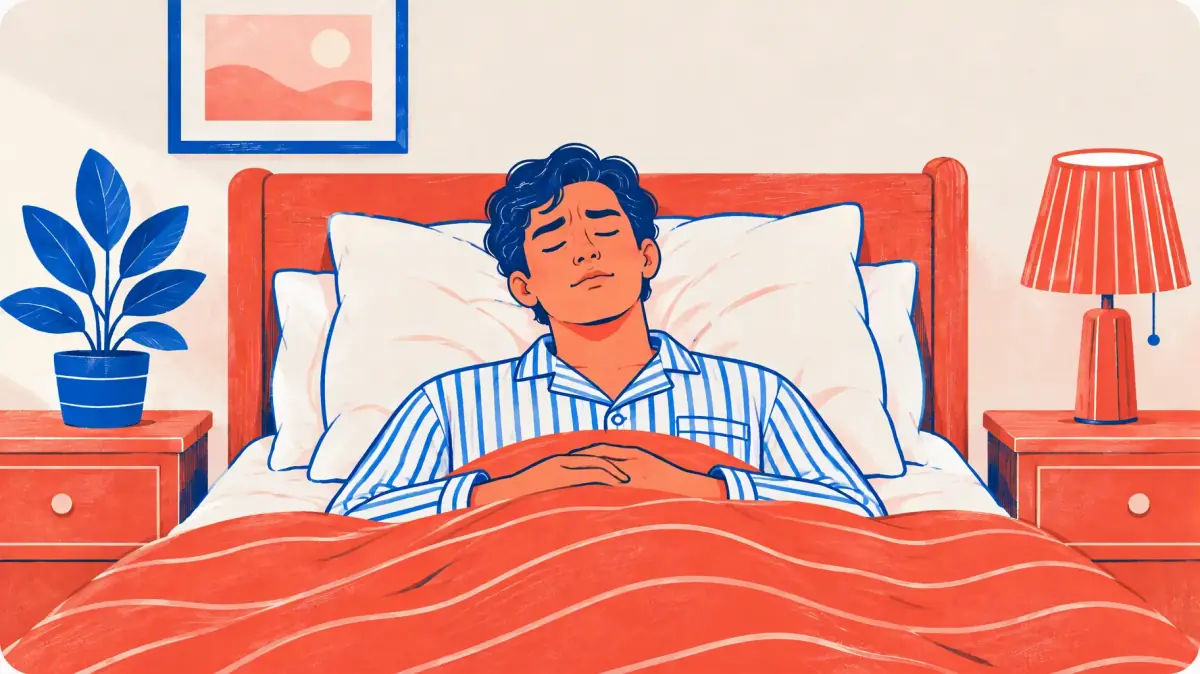
The treatment did not fit. You stopped. The sleep apnea did not. Every night, your blood oxygen levels can keep dropping.
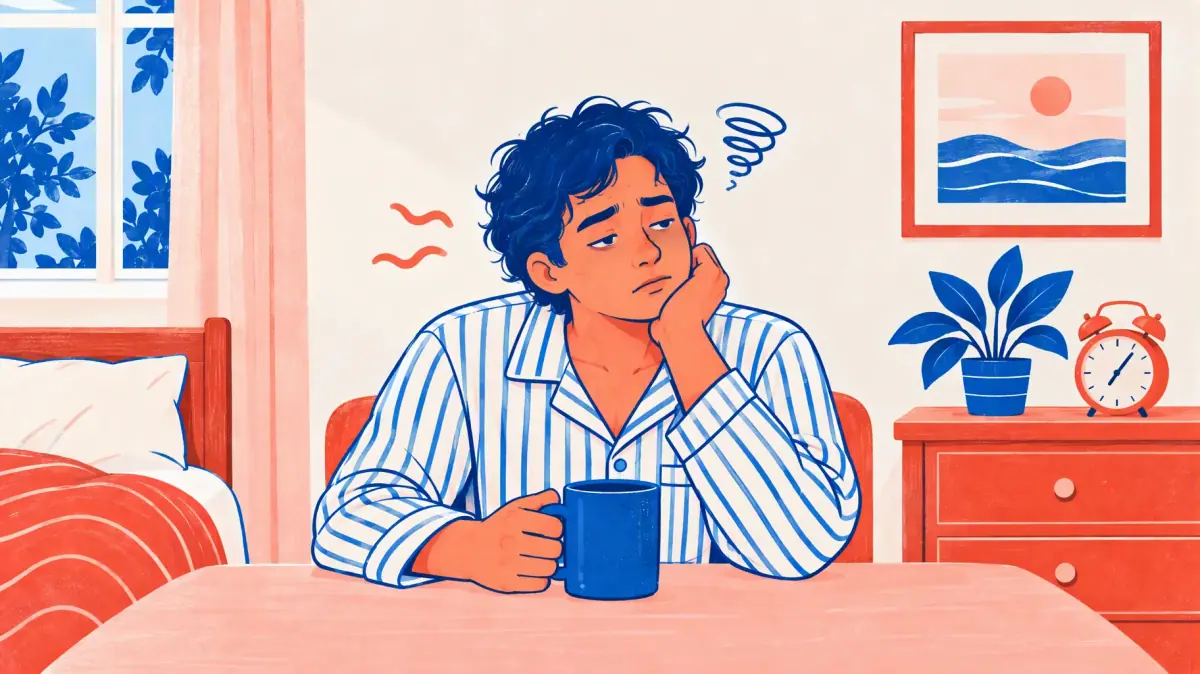
Snoring, morning headaches, or everyday fatigue can start to feel routine. Even if you’ve gotten used to it, your body hasn’t.
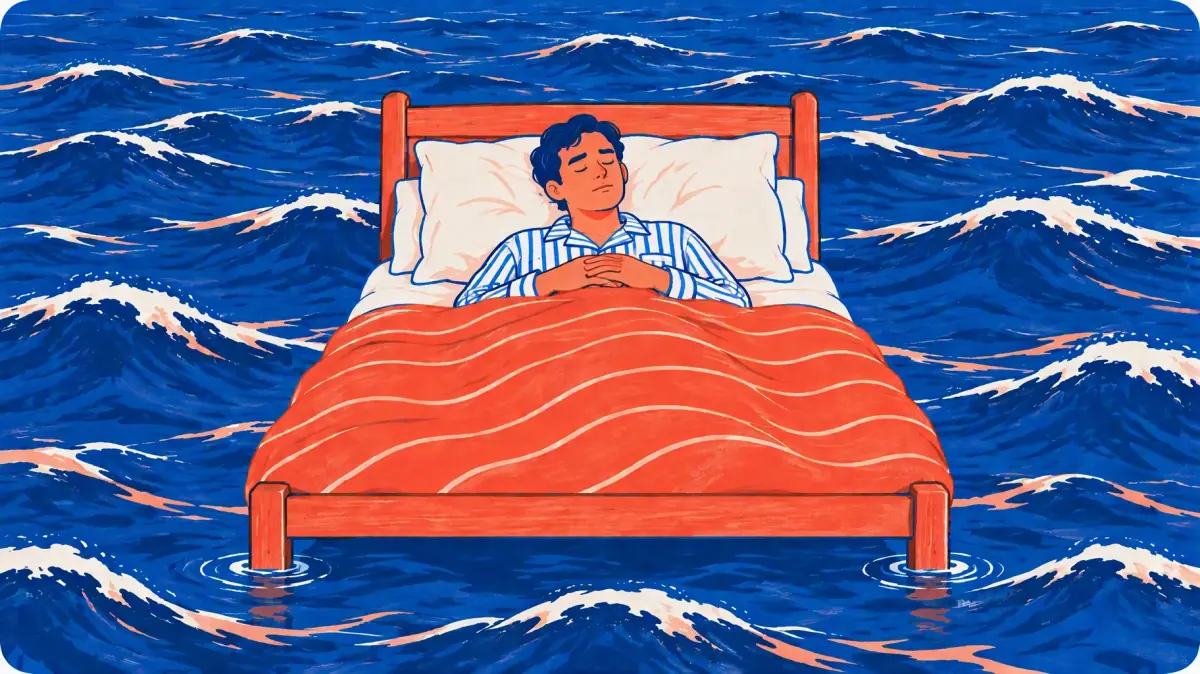
Over time, the "oxygen debt" of untreated sleep apnea may leave you in danger of damage to your heart, energy, and memory.
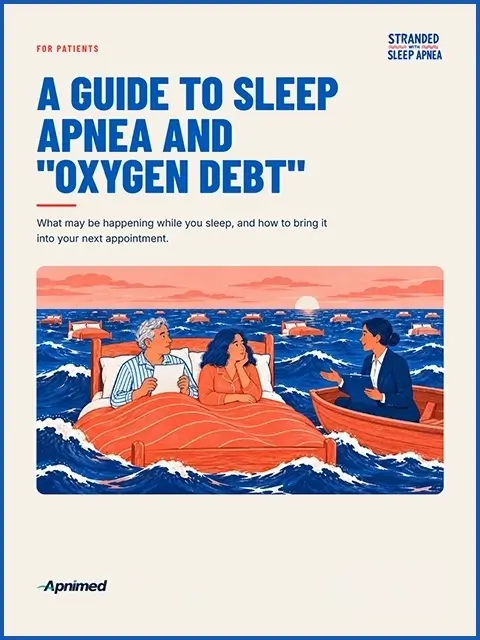
Free download
A Guide to Sleep Apnea and "Oxygen Debt" explores how disrupted breathing affects oxygen levels and what that can mean for your health. Make sense of what happens while you sleep, and feel more prepared to talk with your doctor about care.
Get the guideHear from the sleep apnea experts
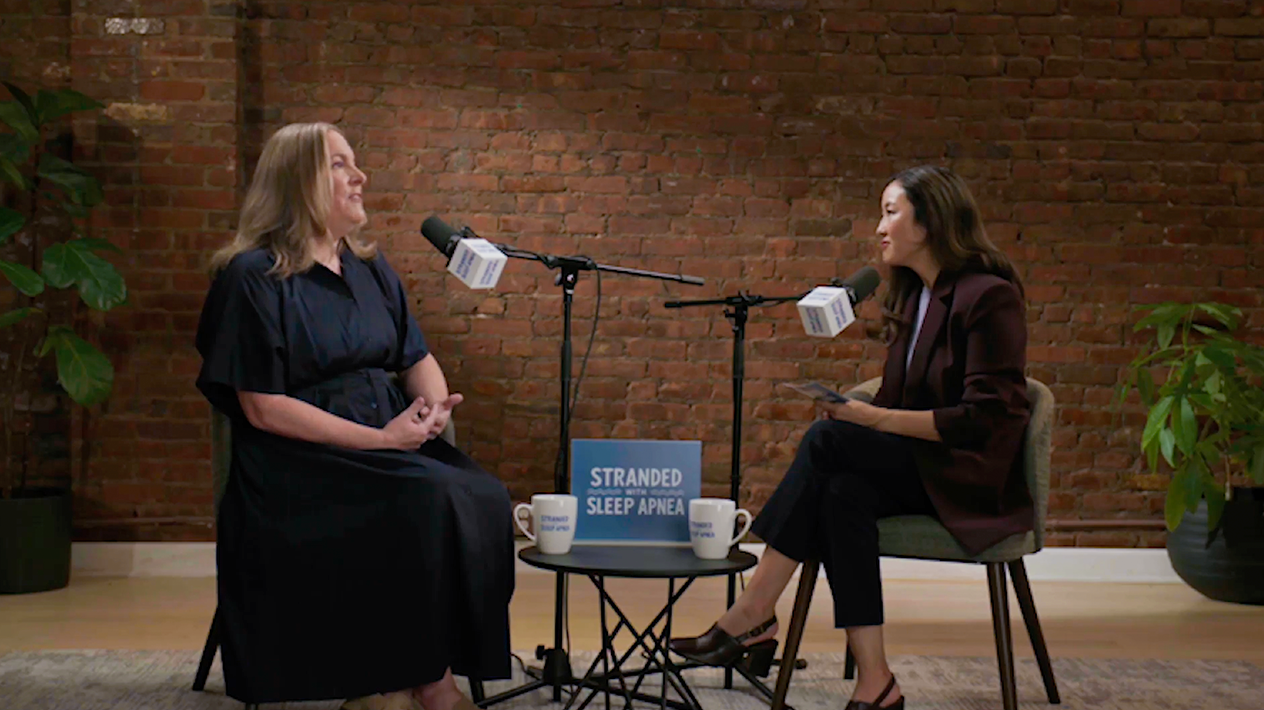
Did you understand the sleep apnea experience before it became a part of your life? Watch as Dr. Cheri Mah and Emma Cooksey of Project Sleep talk about what often goes unsaid, and what makes it easier to talk about honestly.
Featuring Emma Cooksey, with host Dr. Cheri Mah.
Emma Cooksey: I was on this trip of a lifetime with amazing blue water and colorful fish and all of this, you know, amazing surroundings. But I didn't really feel like I was there, truly experiencing it.
[Title card: The part nobody warned me about — A Stranded With Sleep Apnea conversation]
Dr. Cheri Mah: Hi, I’m Dr. Cheri Mah, a sleep physician and performance specialist and host of the Stranded With Sleep Apnea podcast series. Joining me today is Emma Cooksey, a Project Sleep patient advocate and experienced podcast host who has spent years creating space for people to talk candidly about sleep apnea. Now she's here to help us understand what doesn't always appear in a sleep study, and what often doesn't come up in a doctor's appointment.
[Lower third: Dr. Cheri Mah | Host, Stranded With Sleep Apnea | Sleep physician and performance specialist]
Dr. Cheri Mah: Can you kind of unpack that a little bit more of what it was like before you got diagnosed, and how that was impacting your day to day?
Emma Cooksey: So at work, I dealt with so much daytime sleepiness that I would have to excuse myself for meetings to go splash water on my face just to wake up. More often than not, in that period, I was kind of blaming myself. Like I didn't really know what was wrong, but I knew that I couldn't keep up with everybody else.
[Lower third: Emma Cooksey | Sleep Apnea Program Manager, Project Sleep]
Dr. Cheri Mah: Now, in the untreated sleep apnea survey, where they looked at a thousand patients who are diagnosed with sleep apnea yet are untreated, there is a large percentage, 84% say that they feel that sleep apnea is stigmatized in the general public. How does that resonate with you?
[On-screen text: Based on a survey of 1000 adults with untreated obstructive sleep apnea (OSA). Stigma: any level, from slightly to significantly stigmatized, among the general public. Responses were self-reported and subject to recall and response bias. Adults self-identified as being diagnosed with OSA.]
Emma Cooksey: That doesn't surprise me at all. Soon after I got my diagnosis, I came face to face with this. When I was at a cookout in our neighborhood and one of our neighbors was asking how I was and what was new with me, and I told him that I had just been diagnosed with sleep apnea. And I'll never forget he said, oh, I didn't know that was something that women could have. Isn't that something that big old truckers have? And he was just making a joke, and it seemed fairly harmless, but it was enough to make me kind of embarrassed and and question like, oh, maybe this isn't the most feminine thing to be diagnosed with.
Dr. Cheri Mah: So I want to talk a little bit about how you viewed yourself or what you’ve heard from other individuals who have apnea.
Emma Cooksey: I was less and less confident at work and started taking on less challenging roles just because I was struggling so much. I hear that from a lot of people that it just kind of undermines your self-confidence in a way.
Dr. Cheri Mah: Do you have advice for someone who might be in that position or recently received the diagnosis and are kind of sitting with it and processing it and figuring out what to do?
Emma Cooksey: So people feel so alone. And I guess the main message I want people to hear is that they're absolutely not alone in this diagnosis.
Dr. Cheri Mah: Discover the impacts of untreated sleep apnea at strandedwithsleepapnea.com.
[On-screen text: Say it out loud. You’re not alone.]
[End card: Stranded With Sleep Apnea logo. Visit StrandedWithSleepApnea.com to learn more. Social media icons: Facebook, Instagram, YouTube, LinkedIn, TikTok.]
[End matter: Sponsored by Apnimed. This video is for educational purposes only and is not medical advice. Talk with your healthcare provider about your health. Dr. Cheri Mah and Emma Cooksey are paid consultants of Apnimed, Inc. The Untreated OSA Survey (conducted July 28 to August 18, 2026) was an online survey of 1000 adults with diagnosed, untreated obstructive sleep apnea (OSA), 500 bed partners of such adults, 500 diagnosed treated adults, and 505 healthcare professionals who regularly diagnose and/or treat OSA. The survey’s goal was to understand the psychosocial impact, experiences, barriers, perceptions, and unanswered questions related to untreated OSA among those surveyed. Responses were self-reported and subject to recall and response bias. Adults self-identified as being diagnosed with OSA. MED-US-NP-2600042 11/26]
Health, energy, and relationships
Sleep apnea is linked with high blood pressure, heart disease, stroke and type 2 diabetes.
Poor sleep can make it harder to stay alert, remember things, and focus.
72% of people living with untreated sleep apnea said it affects how they see themselves, their confidence, or their identity. And 84% believe sleep apnea is stigmatized.
95% of surveyed bed partners said their own sleep was disrupted by their partner’s sleep apnea.
| Heart and blood sugar | Sleep apnea is linked with high blood pressure, heart disease, stroke and type 2 diabetes. |
|---|---|
| Energy and thinking | Poor sleep can make it harder to stay alert, remember things, and focus. |
| How you feel about yourself | 72% of people living with untreated sleep apnea said it affects how they see themselves, their confidence, or their identity. And 84% believe sleep apnea is stigmatized. |
| Rest for both of you | 95% of surveyed bed partners said their own sleep was disrupted by their partner’s sleep apnea. |
Self-perception: untreated respondents, n=1000, who somewhat or strongly agreed with at least 1 of 7 statements. Stigma: untreated respondents, n=1000; includes slightly, moderately, or significantly stigmatized. Sleep disruption: bed partners, n=500; any frequency, from rarely to every night.
Survey findings
The Untreated OSA Initiative asked people living with sleep apnea, bed partners and healthcare professionals about sleep apnea and care. Among 1000 diagnosed untreated adults, treatment challenges were common.
49% felt mostly on their own to figure out treatment after diagnosis.
53% felt their treatment options didn’t fit their lifestyle.
46% wished they could treat their sleep apnea but hadn't found an option that works for them.
56% said that, at times, dealing with treatment felt as hard as dealing with sleep apnea itself.
| Share of untreated respondents | Reported experience |
|---|---|
| 49% | felt mostly on their own to figure out treatment after diagnosis. |
| 53% | felt their treatment options didn’t fit their lifestyle. |
| 46% | wished they could treat their sleep apnea but hadn't found an option that works for them. |
| 56% | said that, at times, dealing with treatment felt as hard as dealing with sleep apnea itself. |
Untreated respondents, n=1000, who somewhat or strongly agreed with each statement. The first 2 statements asked how they felt about their treatment options at the time of diagnosis.
About the surveyA path back to care
More restful sleep? Fewer worries about your long-term health? Sharing a bed again? Whatever it is for you, it’s worth saying out loud at your next appointment.
77% said a treatment that would help them feel more rested would motivate them to restart.
78% said reducing long-term health risks would motivate them to restart treatment.
51% of bed partners said they’d be more likely to share a bed consistently if their partner started treatment.
| Share of respondents | What they said |
|---|---|
| 77% | said a treatment that would help them feel more rested would motivate them to restart. |
| 78% | said reducing long-term health risks would motivate them to restart treatment. |
| 51% | of bed partners said they’d be more likely to share a bed consistently if their partner started treatment. |
Untreated respondents, n=1000, who somewhat or strongly agreed each would motivate them to restart treatment. Bed partners, n=500, who somewhat or strongly agreed with how their partner starting treatment would change their relationship. These are stated expectations, not measured results.
The Untreated OSA Initiative surveyed people about their experiences with obstructive sleep apnea, treatment and care. The online survey was conducted between July 28 and August 18, 2026.
Who took part
Diagnosis and treatment status were self-reported. The untreated group could include people using positional or myofunctional therapy.
Findings reflect participants’ reports and, where noted, healthcare professional estimates. Different questions were asked of different groups. Results are not national prevalence estimates and do not establish cause and effect.
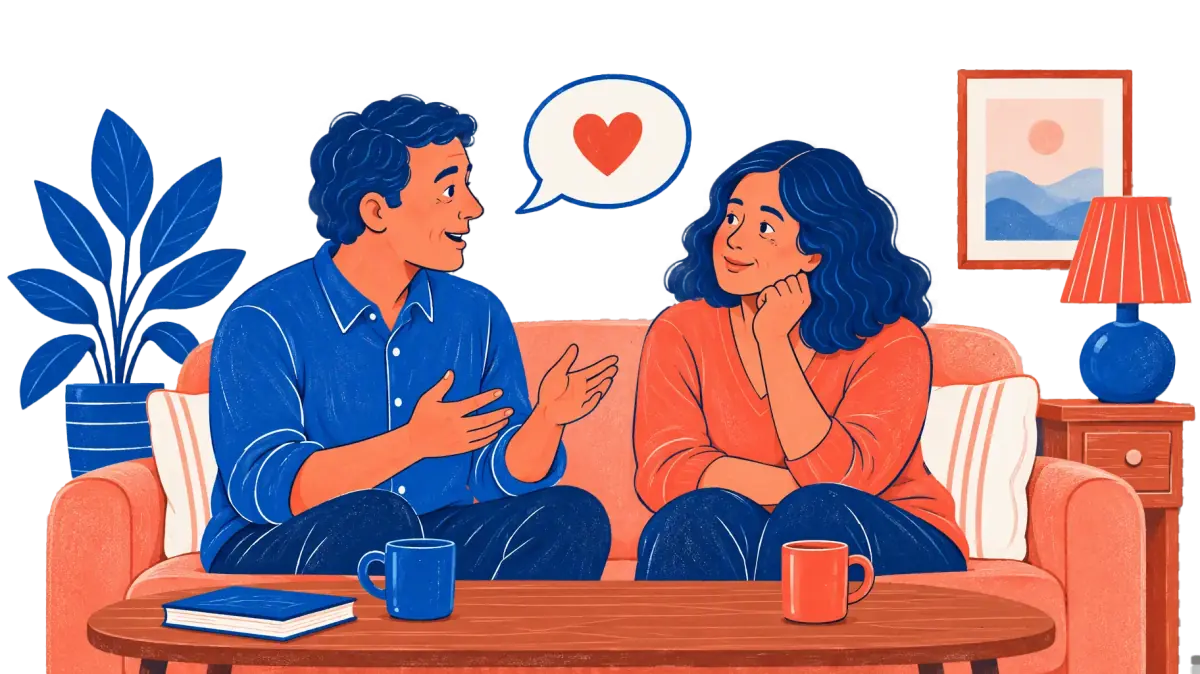
For the person next to you
The person who shares your bed often hears what you can’t. If you’re comfortable, ask them what they’ve noticed, or invite them to your next appointment. You decide how involved they are, and treatment decisions stay between you and your care team.
Stay informed
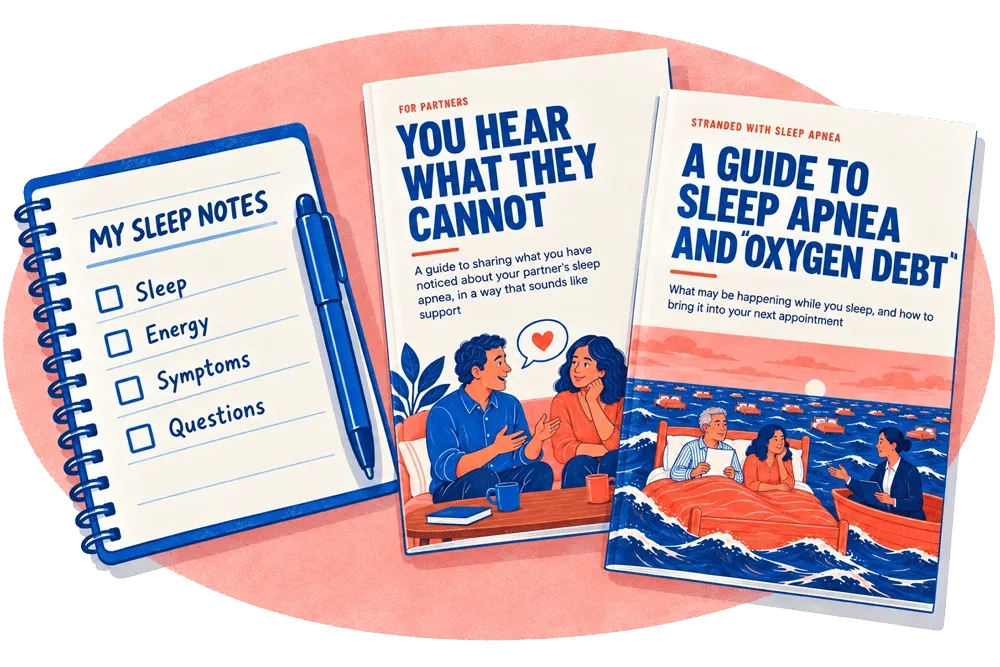
Our free guides and survey highlights can help you better understand sleep apnea and prepare for conversations about care. Email updates will keep you in the loop with new resources, expert videos, and emerging insights as they become available.
Last Updated on October 2026. Medically reviewed and approved by Apnimed.